Obstructive Sleep Apnoea (OSA) and Management
OSA is often thought of as a condition that only affects overweight, older men, but that is far from the reality. It is even seen in infants and in slender, active young people.
What is OSA?
OSA is a condition where the muscles around the soft palate, back of the nose, tongue and throat relax during sleep, reducing the air reaching the lungs. This lowers the oxygen (O2) reaching the brain and every cell in the body, and impairs the exchange of carbon dioxide (CO2). In effect, a neuromuscular collapse or skeletal obstruction of the airway is occurring. When we fall asleep our muscles relax, including the muscles that hold the airway open.
What are the health implications of OSA?
- Higher risk of heart attack or stroke
- Hypertension that is difficult to control
- Diabetes and metabolic disorders
- Depression and anxiety
- Higher risk of cancer, and worse clinical outcomes with cancer
- Risk of motor vehicle or industrial/work accidents
- Liver and kidney dysfunction
- Cognitive decline and academic or work impairment, such as being passed over for promotion
- Relationship problems, often arising from one partner’s snoring
How do we know we might have sleep apnoea?
- There is usually a history of snoring, and often sudden sleep disturbances and arousals as we struggle to get a breath in.
- It might also show up as daytime drowsiness, falling asleep reading or watching TV, low mood, cognitive decline, loss of libido or erectile dysfunction.
- High blood pressure that is difficult to control with medication, or metabolic disturbances such as diabetes.
Signs that matter more in women
When deciding whether a woman should have a sleep test, these factors are often of more value:
- Waking with a headache
- Hypertension
- Being post-menopausal
- Anxiety, depression and other psychiatric conditions
- Insomnia
- Dry mouth (xerostomia)
- Mouth breathing
- Snoring
The Epworth score is somewhat less reliable as an indicator of sleep-disordered breathing and OSA in women than in men, and post-menopausal women are at significantly higher risk.
Screening for OSA at Future Dental
Assessment of OSA risk is a routine part of our comprehensive oral health examinations at Future Dental. Where possible, we ask patients to complete the Epworth Sleepiness Scale, OSA50 and STOP-BANG questionnaires before their consultation.
Some people tend to underscore themselves on the Epworth scale. If your sleep partner can come along to help answer the questions, we are more likely to arrive at the true answer.
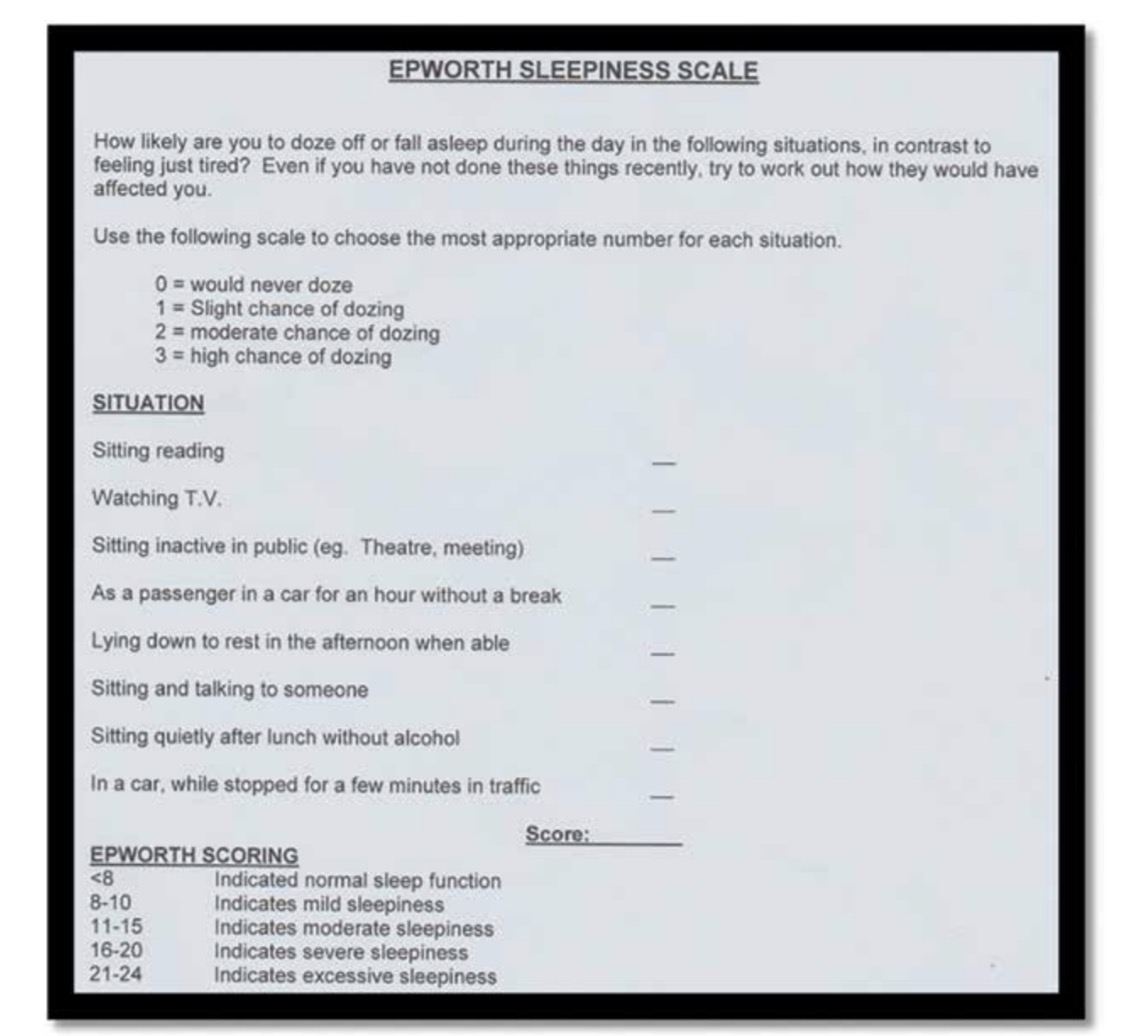
OSA50 score
- Does snoring bother others? (Yes = 3 points)
- Have you been observed to stop breathing during sleep? (Yes = 2 points)
- Are you aged 50 or over? (Yes = 2 points)
- Waist measurement: male over 102 cm, female over 88 cm (Yes = 3 points)
Total score out of 10.
STOP-BANG score
- S – Do you snore?
- T – Do you feel tired during the day?
- O – Have you been observed to stop breathing during sleep?
- P – Do you have high blood pressure?
If you answered yes to two or more of these questions, you are at risk of OSA. If you answered yes to any of them, also answer:
- B – Is your BMI over 28?
- A – Are you aged 50 or over?
- N – Is your neck 43 cm or more (male) or 41 cm or more (female)?
- G – Are you male?
If you answered yes to one or more of these additional questions, you are at risk of moderate to severe OSA.
Why these scores matter for Medicare
For adults aged 18 and over, Medicare will usually contribute to the cost of a home sleep study when the Epworth score is 8 or more and either the STOP-BANG score is 4 or more, the OSA50 score is 5 or more, or the Berlin questionnaire shows high risk. Medicare only contributes to one study in any 12-month period.
Anatomical factors we assess
Anatomical causes are present in only around 30% of people with OSA. The anatomical factors we assess include:
- A recessive lower jaw (retrognathia), a type of malocclusion that causes the tongue to sit further back, reducing tongue space.
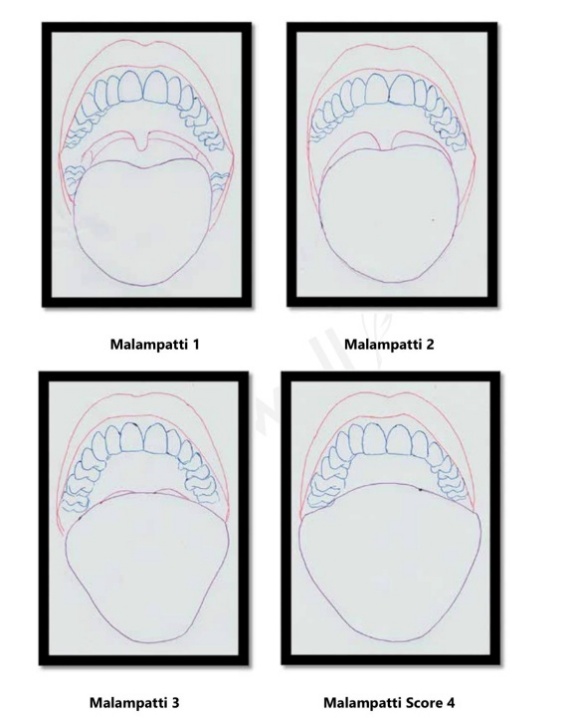
- A large tongue and a long, low-draping soft palate, combined in the Mallampati score (grades 3 and 4 indicate higher risk).
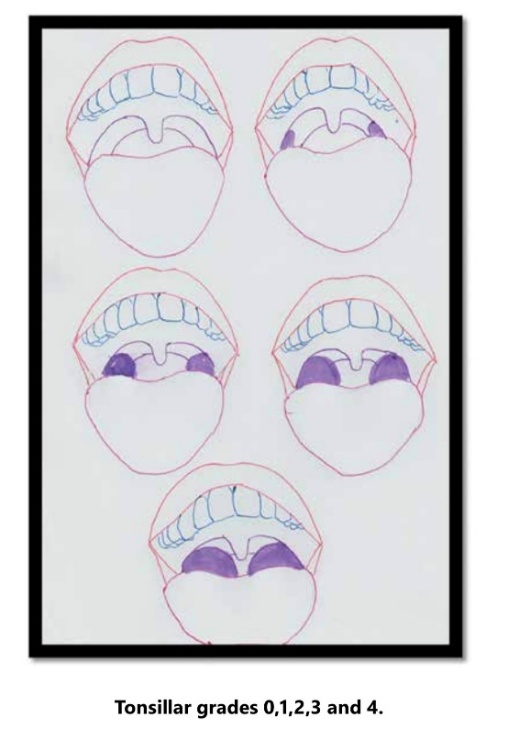
- Enlarged tonsils (tonsillar grades 3 and 4).
- The size, shape and state of the uvula (the small tissue that hangs in the midline at the back of the throat). In OSA and snoring, the uvula becomes a “punching bag”: it swells, elongates and becomes inflamed from the vibration of snoring and turbulent airflow past it.
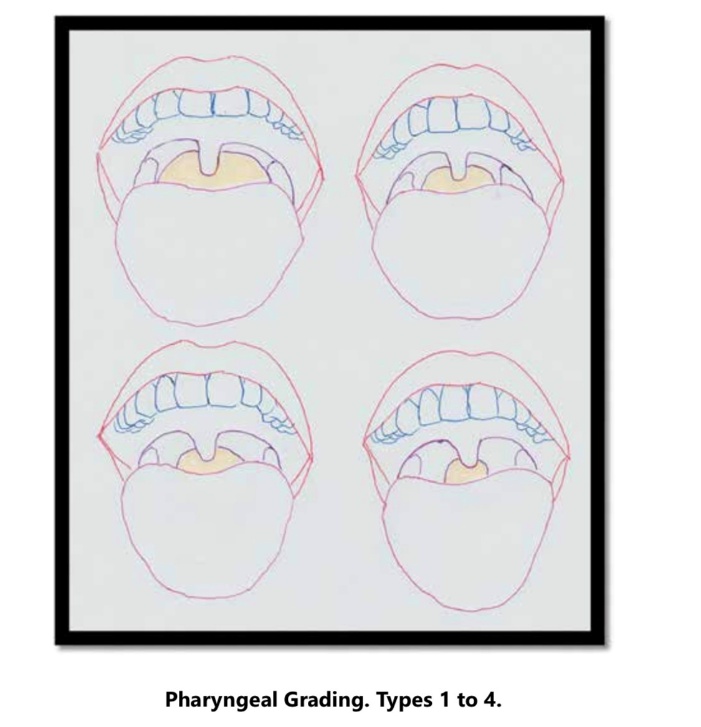
- The two visible arches at the throat entrance: the front (palatoglossal) arch and the back (palatopharyngeal) arch. We compare their relative widths and give a pharyngeal grade from 1 to 4, where a higher grade indicates more potential obstruction in this part of the airway.
- Very narrow jaws, and the overall width and shape of the jaws.
- A narrow, high-arching hard palate, which leaves less room for the tongue and forces it backwards into the oropharynx (the throat behind the mouth).
- A short neck.
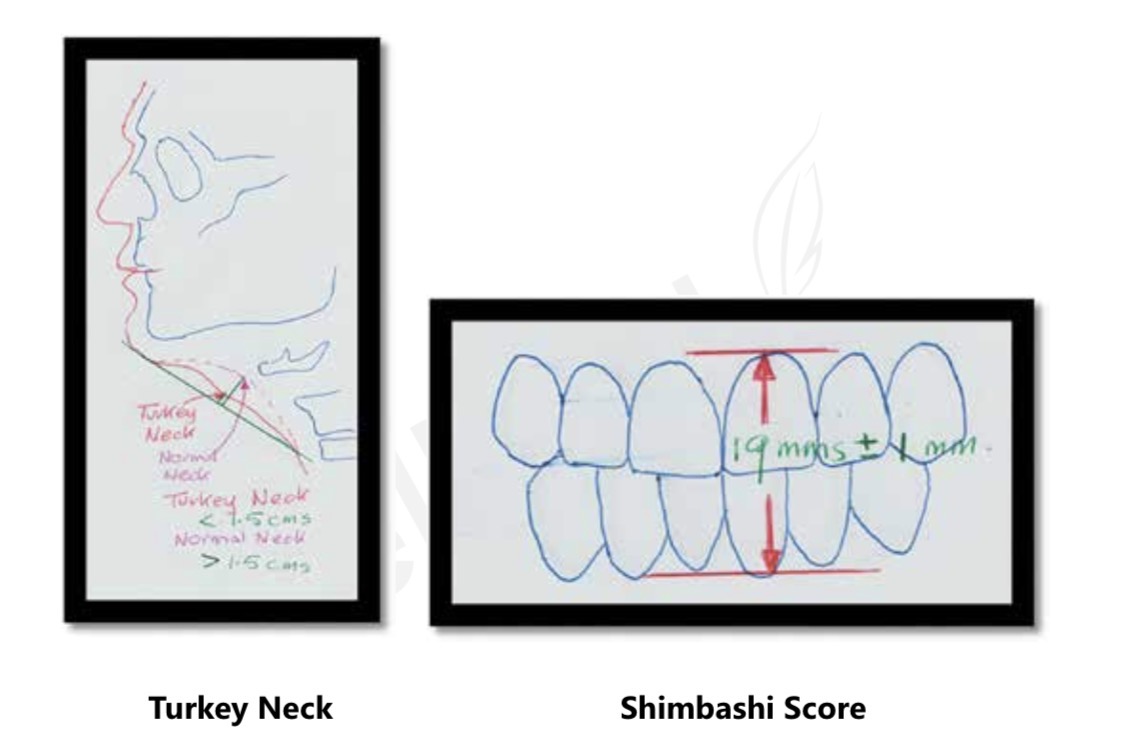
- A “turkey neck”: an assessment of the position of the hyoid bone, the tone of the muscles above and below it, and fatty deposits in the neck.
- The vertical height of the front teeth with the mouth closed, measured as the Shimbashi score. Severe tooth wear reduces the space available for the tongue, as does a very deep overbite, where the lower teeth are almost fully covered by the upper teeth. In that reduced space, the only place the tongue can go is backwards into the throat.
- The epiglottis (the valve that stops food and fluid entering the windpipe when we swallow). A dentist can rarely see it, so this is better assessed by an ENT specialist.
- Obesity. Fatty deposits in the tongue, under the jaw, around the neck and around the upper airway reduce airway volume. However, not everyone who is obese has OSA, as some people have very strong airway muscles that hold the airway open during sleep. Obesity is a factor in fewer than half of OSA cases.
- Other orthodontic malocclusions, including an upper jaw positioned too far back (mid-face deficiency) or both jaws positioned too far back.
- A short face or a long face.
- Crowded teeth, which often indicate a lack of space for the tongue. We assess for malocclusions routinely, and the orthodontist is often an important partner in managing OSA.
- Nasal obstruction, which often leads to mouth breathing, a condition that predisposes to OSA. It may be bony, such as a deviated nasal septum or enlarged inferior turbinates (the scroll-shaped bones on the outer wall of the nose), or soft tissue, such as nasal polyps, swelling from a cold or respiratory infection, hay fever or allergic rhinitis. Soft tissue growths and tumours can also obstruct the nasal airway.
- A narrow face, which means narrow nasal airways, often seen as narrow nostrils.
- Bruxism (grinding and clenching the teeth), which is very frequently seen in OSA. Tooth wear, scalloping along the sides of the tongue and testing of the jaw muscles confirm this habit, which surprises many people who are unaware of it.
- Laryngopharyngeal reflux (silent reflux), which very often occurs alongside bruxism in OSA.
When we suspect OSA, we routinely refer for an ENT assessment, as the ENT specialist can examine the nasal airways, throat, epiglottis and vocal cords, all important in a proper OSA investigation.
Getting a diagnostic sleep test
If we suspect OSA during a routine oral health examination, if a patient has been referred to us for OSA assessment (as often occurs), or when patients ask us themselves, we will recommend a diagnostic sleep test, called a polysomnography (PSG).
Most commonly, we provide a QR code and information sheet that lets you log in to Sentinel Sleep, one of Australia’s leading providers of diagnostic sleep testing. This opens a pre-sleep-test questionnaire that includes the three scoring tests Medicare uses.
Your answers to these three questionnaires decide whether Medicare contributes to the cost. It is better not to underscore yourself: if you do, you may have to pay the full cost of the Type 2 diagnostic home polysomnography yourself, rather than only the co-payment with Medicare funding the rest.
I always advise patients in whom I suspect OSA to have the test done either way, with or without a Medicare contribution. OSA can significantly shorten life expectancy, and moderate to severe OSA has very serious health implications.
There are often reasons to have a follow-up PSG, but Medicare only contributes to one study in any 12-month period, and only for patients aged 18 or older.
Other types of sleep test
Type 1 PSG (hospital sleep unit). Your GP or Sleep Physician can refer you to a hospital sleep unit, where you spend the night being monitored and observed on closed-circuit camera by a nurse. This is probably the finest current method, but it is more complex to arrange, there are often long waits for a booking, and some people sleep poorly away from their own bed, which gives less meaningful results. One advantage is that the pressure at which the airway stays open can be tested, which is very useful in the PALM assessment described below. This cannot be tested in a home study, although a diagnostic Type 2 home PSG still allows the Sleep Physician and Sleep Technician preparing the report to draw very useful conclusions.
Type 3 and 4 tests. Pharmacy-based, dentist-based and other health-worker-based Type 3 and 4 home sleep tests are available. These measure fewer parameters and only indicate that OSA might be present; no formal diagnosis can be made from them.
Wearable devices. Some wearable devices can give an indication of risk. These are of no diagnostic value but may alert someone that they should be properly tested.
If you have had a Type 3, Type 4 or wearable test that shows some risk, a formal Type 1 or Type 2 diagnostic PSG is indicated, as these are the only tests that give a formal diagnosis made by a Sleep Physician.
What is a PSG looking at?
- Apnoea: a total obstruction where the airway closes and no air reaches the lungs, lasting longer than 10 seconds.
- Hypopnoea: a partial obstruction that limits the air reaching the lungs, lasting longer than 10 seconds.
- AHI (Apnoea Hypopnoea Index): the number of apnoeas and hypopnoeas per hour. This was traditionally the standard measure for diagnosis, but it is not an accurate determinant of OSA in all people.
- RERA (Respiratory Effort-Related Arousal): a more recent addition. This is typically a total or partial obstruction lasting less than 10 seconds, and can include repetitive grinding and clenching of the teeth during sleep to reopen the blocked airway.
- RDI (Respiratory Disturbance Index): RERAs added to the AHI. The RDI is a truer reflection of OSA in many cases.
- PALM assessment: a recent addition that modernises this process (see below).
Beyond anatomy: other factors in OSA
Because around 70% of people with OSA show no obvious anatomical risk factors, further investigation is needed. This explains why anatomy-only treatments such as CPAP or surgery sometimes fail. Other considerations include:
- Snoring is very common in OSA and causes trauma to the throat, which may lead to nerve changes in the supply to the muscles that hold the airway open.
- Bruxism and silent reflux frequently accompany OSA, and patients are usually unaware of both.
- Age is a risk factor: obesity increases with age, and muscular control of the airway dilator muscles reduces.
- Sex: males have a higher incidence, but females start to catch up after menopause.
- Sleep position: lying on the back (supine) increases airway resistance, and this increases markedly during sleep when the airway muscles relax. Supine sleep is invariably the worst position for OSA.
- REM sleep is typically the worst sleep stage for OSA because the muscles are at their most relaxed. The proportion of each sleep stage is noted, as is sleep efficiency.
- Insomnia is very common in people with OSA: 30–40% of OSA cases also have insomnia. Cognitive Behavioural Therapy (CBT) should be considered in treatment planning for these patients.
Sleep apnoea is a far wider public health problem than most people realise, and it often has no obvious symptoms to alert the patient. It is largely an undiagnosed epidemic. People subconsciously learn to live with their OSA, and it can be difficult for a sleep professional to convince someone they may be at risk, often because of the public perception that sleep apnoea only affects overweight, older men who snore.
In many years of arranging sleep testing for my patients, very few have returned without a diagnosis of OSA.
The PALM classification
The traditional measure of OSA is the AHI, but this is less targeted than the PALM classification, which sorts OSA into four distinct underlying causes (endotypes). Roughly 70% of OSA patients have non-anatomical contributing factors: high loop gain, low arousal threshold or poor muscle compensation. In those without anatomical risk factors, one or more of these PALM factors is involved.
P – Passive critical closing pressure (P-crit)
P-crit measures how collapsible the airway is during sleep, based on body position, the soft tissues around the airway, and the structure and shape of the face and jaws.
- About a quarter of OSA cases have very collapsible airways that close at a pressure above 2 cm H2O. These patients will need CPAP, airway surgery, a mandibular advancement splint, or a combination, to manage their OSA.
- In highly collapsible airways, apnoeas are usually more common than hypopnoeas.
- In most people with OSA, the airway closes at around atmospheric pressure.
- About a fifth of OSA cases have minimally collapsible airways that close at a suction pressure of −2 to −5 cm H2O; for these patients, other PALM factors are the cause.
- Nasal obstruction may raise the P-crit.
- The aim of treatment is to bring the P-crit back to −5 cm H2O to control OSA.
A – Arousal threshold
This is how easily a person wakes when the airway narrows during sleep. A low arousal threshold causes premature awakenings and cycles of unstable breathing.
- It is seen in light sleepers, and perhaps more in those who spend longer in stage 1 sleep.
- During sleep, the relaxed airway muscles narrow the airway, creating negative pressure compared with the outside air.
- About a third of people with OSA simply wake up too easily.
- This type typically responds poorly to CPAP, so non-CPAP options should be considered. These patients may also not always respond well to oral appliance therapy (such as a mandibular advancement device), but airway surgery or oral appliance therapy remain the preferred options.
- People with a low arousal threshold may also not respond well to hypoglossal nerve stimulation (HNS).
- A low arousal threshold is often seen in patients with insomnia; 30–40% of OSA patients also have insomnia.
L – Loop gain
Loop gain is a marker of how stable the breathing control system is, or how sensitive we are to carbon dioxide (CO2) levels in the lungs. CO2 level is the body’s trigger to take a breath.
- High loop gain means breathing over-reacts to small changes in the oxygen/carbon dioxide balance, causing periods of over-breathing alternating with under-breathing.
- About a third of people with OSA have unstable breathing control (high loop gain).
- Patients with high loop gain often respond well to oxygen therapy, and some are managed with medication prescribed by their doctor.
M – Muscle responsiveness
This is how well the airway dilator muscles keep the airway open as pressure changes during breathing. These muscles include the genioglossus, tensor veli palatini, levator veli palatini, palatopharyngeus, palatoglossus, styloglossus, hyoglossus, musculus uvulae and the suprahyoid muscles. The intrinsic muscles of the tongue (superior longitudinal, inferior longitudinal, transverse and vertical) no doubt also play a role.
- Patients with no anatomical risk factors may fall into this group because their airway dilator muscles are weak.
- About a third of people with OSA cannot generate enough muscle activity to hold the airway open.
- Myofunctional therapy with an Orofacial Myofunctional Therapist is needed as part of managing this group, and I recommend it in all OSA cases.
- In patients with low muscle tone contributing to airway obstruction, myofunctional therapy and hypoglossal nerve stimulation may be quite effective.
Treatment options
Most cases of OSA can now be managed without CPAP, the old gold standard.
Beyond CPAP, oral appliance therapy with a mandibular advancement device (MAD) and airway surgery, treatment may include:
- Good sleep hygiene
- Management of silent reflux
- Management of sleep grinding and clenching (bruxism) with CBT, physiotherapy and, in some cases, muscle relaxant injections
- Breathing retraining
- Sleep position changes. Avoiding supine sleep (lying on the back) matters, as it is the worst position for OSA. The old trick of sewing a tennis ball into the back of a singlet or T-shirt works to move a person off their back, and there are electronic positional devices that buzz if you roll onto your back.
Medication
Medication for OSA is usually managed by your GP or Sleep Physician, not the OSA dentist. Depending on which PALM factors are involved, medications may be used to help stabilise breathing (loop gain), to help people stay asleep (arousal threshold), to improve airway muscle activity, or to support weight loss where fatty deposits in the tongue and upper airway are contributing. Some sleep-promoting medications are best avoided where airway muscle control is a risk factor, and carry risks of falls, next-day drowsiness and impaired performance, especially in older people. Your doctor will discuss whether any medication is suitable for you.
ENT surgeons can also treat nasal allergies that cause nasal obstruction, often with prescribed nasal sprays after allergy testing (RAST blood testing and skin prick testing).
Surgical options
Multi-level surgery has a role in the multi-faceted management of OSA. Techniques involve the nose, soft palate, tonsils and adenoids, maxillary expansion, maxillo-mandibular advancement, hyoid elevation, genioglossus repositioning, tongue surgery, gastric banding and bypass, and laser procedures to the soft palate.
- ENT surgeons may perform UPPP surgery, septoplasty, turbinate reduction, polypectomy, and endoscopic sinus rinsing and surgery.
- Oral and maxillofacial (OMF) surgeons perform procedures such as SAME, MARPE and MMA surgery, radiofrequency reduction of fatty deposits in the tongue base, hyoid elevation, genioglossus repositioning, and placement of hypoglossal nerve stimulators.
- OMF surgeons working with orthodontists also perform maxillary expansion using DOME and DOMEZero surgery.
Talk to us about your sleep
If you snore, feel tired during the day or have been told you stop breathing in your sleep, contact Future Dental on (07) 4051 4580 or book an appointment. You can also start with our Nose Score assessment or read more about how we investigate OSA.
Dr Robert B Gibbins, Future Dental, Cairns. www.dentalsleepmed.com.au