Incisal Wear Cairns
Deep, Discoloured Grooves on Your Lower Front Teeth — Class 6 Incisal Wear
Effectively identify, treat and protect your worn lower front teeth using laser dentistry
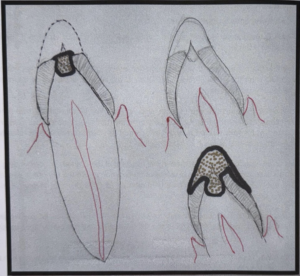
Class 6 incisal wear describes the deep, discoloured grooves that develop along the biting edges of lower front teeth. What begins as surface discolouration becomes a hollow trough through the enamel and into the dentine beneath, leaving a thin, fragile enamel rim that is increasingly prone to decay and fracture.
Future Dental treats this condition routinely using the Waterlase dental hard tissue laser. The process is painless, requires no anaesthetic injection in most cases, and allows all affected teeth to be treated in a single appointment.
Why the equipment used makes all the difference
The key to a successful and lasting repair is how the tooth is prepared before the filling is placed.
Many dentists overlook
these lesions unless a patient specifically raises them. Those who do treat them often use a conventional drill, which creates microscopic fractures in the thin enamel rim and further weakens the very structure being repaired.
Fewer than one in three dentists have access to air abrasion, which is less damaging than a drill but still not the most conservative approach available.
WATERLASE LASER TREATMENT: The Waterlase dental hard tissue laser is the gold standard for treating Class 6 incisal wear. It causes no enamel microfractures, is exceptionally precise and tooth-conserving, and is completely painless with no needles required in most cases. All wear grooves can typically be c
leaned, prepared and filled in a single appointment. Future Dental has used the Waterlase to treat this condition for many years.
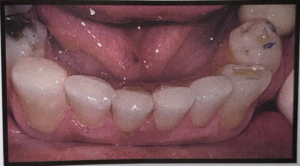
What causes Class 6 incisal wear?
It is usually a combination of tooth wear and a dry mouth.
TOOTH WEAR: Wear along the biting edge is a normal part of ageing, but it is accelerated by grinding or clenching (bruxism), by biting hard objects such as pens or fingernails, and by acid erosion from food, drinks, or stomach acid.
DRY MOUTH (XEROSTOMIA): Saliva is one of the mouth’s main defences against decay and erosion. When saliva flow is reduced, teeth become far more vulnerable. Common causes include nicotine, caffeine, and alcohol; many prescription and over-the-counter medications; ageing, which is the most common cause overall; hormonal changes including puberty and menopause; conditions such as Sjögren’s syndrome; and radiation therapy to the head and neck.
ACID EROSION: Chemical erosion from acids in food and drinks, or from stomach acid via reflux or chronic vomiting, accelerates both decay and groove formation along the biting edge. Silent reflux (laryngopharyngeal reflux) is a particularly common cause, as it presents without obvious heartburn symptoms and frequently goes undiagnosed.
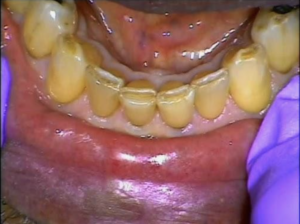
There are several reasons why Class 6 incisal wear needs to be treated:
- To stop decay progressing. Once wear breaks through the enamel and reaches the dentine, decay accelerates rapidly. Early treatment is a far simpler intervention than what becomes necessary if it is left.
- To prevent fracture of the enamel rim. The thin enamel rim surrounding the groove is structurally vulnerable. Without treatment it will eventually fracture, complicating repair significantly.
- To restore the biting edge. Advanced wear flattens and weakens the incisal edge, reducing chewing efficiency and altering the bite. A filling restores the tooth’s original form and function.
- To address the underlying cause. Treating the visible damage without identifying the contributing factors, whether dry mouth, grinding, reflux, or dietary acids, means the repair is more likely to fail or need repeating.
Waterlase Laser Preparation
Waterlase laser preparation is the most tooth-conserving approach to treating Class 6 incisal wear. Its defining advantage is that it works without creating the enamel microfractures that a drill inevitably produces. The laser removes only the decayed and discoloured tissue within the groove, leaving the surrounding enamel rim intact and undamaged.
For this specific presentation, thin enamel, a fragile rim, and decay within a narrow groove, it is the ideal instrument. Loss of tooth vitality from the preparation process is virtually never seen with this approach, and Future Dental has extensive clinical experience treating this condition.
Dr Bob Gibbins and the team at Future Dental in Cairns have been caring for patients with complex and often-overlooked dental problems like Class 6 incisal wear for over 50 years.